

When it comes to managing humidity in Burlington, IL, setting up a seasonal dehumidifier can make a significant difference in your home’s comfort. You’ll want to take into account factors like humidity levels, the right unit size, and proper placement. Each of these elements plays a vital role in the effectiveness of your dehumidifier. But how do you guarantee you’re making the best choices for your space? Let’s explore the essential steps to get you started.
Understanding the Importance of Dehumidifiers
When you’re dealing with excessive humidity in your home, it’s easy to overlook the impact it can have on your comfort and health. High humidity levels can create a breeding ground for mold and dust mites, leading to respiratory issues and allergies.
You might notice that your home feels sticky and uncomfortable, making it harder to relax or sleep well. In addition, excessive moisture can damage your furniture, electronics, and other belongings over time. It can even warp your wooden floors and walls.
By understanding the importance of dehumidifiers, you can take proactive steps to maintain a healthier living environment. These devices work to remove excess moisture from the air, helping you achieve ideal humidity levels. Not only will you enjoy increased comfort, but you’ll also be protecting your home and your well-being. Investing in a dehumidifier is a smart choice for any homeowner facing humidity challenges, as it can significantly improve indoor air quality and reduce health risks associated with high humidity.
Choosing the Right Dehumidifier for Your Home
How do you determine the best dehumidifier for your home? Start by evaluating your space’s humidity levels and square footage.
If you’re dealing with a damp basement or a larger area, opt for a unit with a higher capacity—typically measured in pints of moisture removed per day. Look for energy-efficient models that have the ENERGY STAR label to save on electricity costs.
Consider features like adjustable humidity settings, a built-in humidistat, and a continuous drainage option for convenience. If noise is a concern, check for models designed for quieter operation.
Also, think about maintenance; a unit with a removable, washable filter can make upkeep easier. Additionally, proper humidity control is essential for alleviating allergy and asthma symptoms, which can significantly improve your home’s comfort and air quality.
Finally, read reviews and consult with local experts, like Leith Heating and Cooling, to find a model that fits your specific needs. Choosing the right dehumidifier can greatly enhance your home’s comfort and air quality.
Ideal Placement and Setup Tips
Where should you place your dehumidifier for the best performance? Start by positioning it in the room that’s most affected by humidity, like your basement or laundry area.
Make certain it’s at least 12 inches away from walls and furniture to allow proper airflow. Avoid placing it in corners or behind doors, as this can restrict air circulation.
For ideal efficiency, keep windows and doors closed while the dehumidifier is running; this helps it work more effectively.
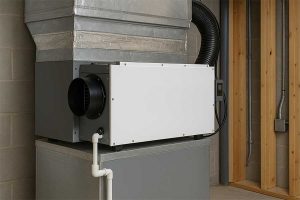
You might also consider using a fan to enhance air circulation, especially in larger spaces. If you have a continuous drainage option, set it up to avoid frequent emptying of the tank.
Finally, make sure the unit is level to prevent any operational issues. By following these placement and setup tips, you’ll create a comfortable environment while maximizing your dehumidifier’s effectiveness. Regular maintenance, similar to AC Maintenance, can also ensure your dehumidifier operates at peak efficiency.
Seasonal Maintenance for Optimal Performance
To guarantee your dehumidifier performs at its best throughout the seasons, regular maintenance is essential.
Start by checking the air filter monthly; a clean filter enhances airflow and efficiency. If it’s dirty, replace it.
Next, inspect the water collection bucket for any signs of mold or mildew. Clean it with a mixture of water and vinegar to prevent buildup.
You should also check the coils and the exterior for dust accumulation; wipe them clean as needed.
Ascertain that the drainage system is functioning properly, as clogs can lead to overflow issues.
Finally, run your dehumidifier regularly, even during dry months, to keep its components in good working order. Regular maintenance, including AC filter replacement, is crucial for optimal system performance and efficiency.
Troubleshooting Common Dehumidifier Issues
While dehumidifiers are generally reliable, you might encounter a few common issues that can impede their performance.
If your unit isn’t collecting water, check the water bucket; it might be full or not seated properly. A dirty or clogged filter can also restrict airflow, so make certain to clean or replace it regularly.
If your dehumidifier’s fan isn’t running, it could be due to a faulty motor or a tripped circuit breaker.
Inconsistent humidity levels can signal that the unit isn’t sized correctly for your space. If you notice strange noises, inspect for loose parts or debris stuck in the fan.
Finally, if your dehumidifier is leaking, verify the drain hose is properly connected and not kinked.
Conclusion
Setting up a seasonal dehumidifier in Burlington, IL, is like nurturing a garden—you have to provide the right conditions for growth. Just as a plant thrives with the right amount of water and sunlight, your home flourishes with balanced humidity levels. By following these guidelines, you’ll not only enhance your indoor air quality but also create a comfortable oasis during those sticky summer months. So, invest the time and effort, and your space will thank you!